




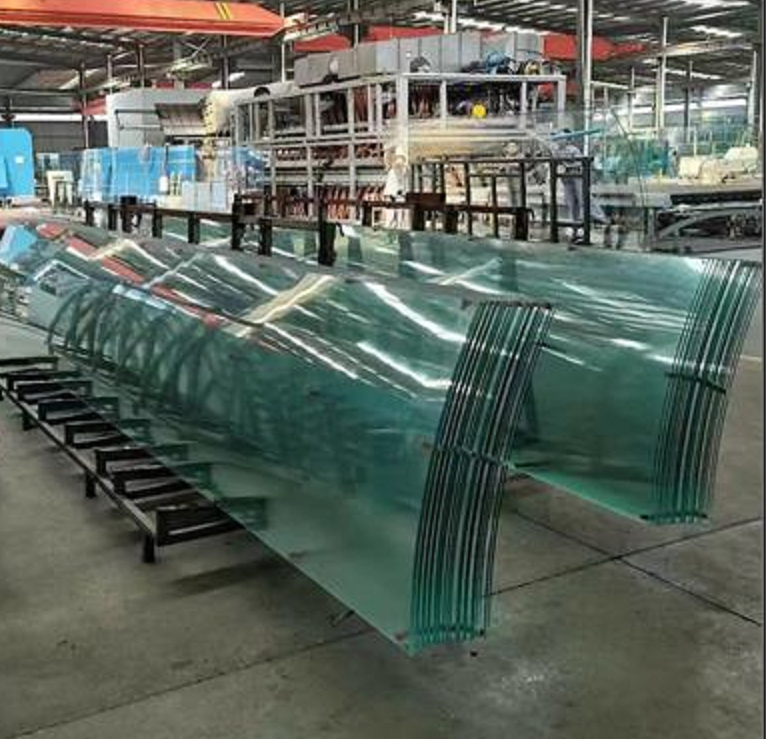
On the line, heat isn’t just temperature. It’s timing, uniformity, and repeatability. If the bending furnace ramps unevenly, you get optical distortion. If the lamination oven under-cures, you risk delamination down the road. We build heating modules for glass plants where the margin for error is measured in seconds, and scrap is measured in real money. What matters under the hood We lean on quartz short-wave infrared and medium-wave elements, because they respond fast and hold tight control. Quartz gives you high power density with low thermal mass, so a zone hits setpoint quickly and tracks the recipe without overshoot. Medium-wave reaches deeper and smooths the profile across thicker stacks in lamination and coating drying. We size these for 24/7 duty, with solid terminations, standardized mounting, and stable emissivity across the life of the element. The payoff is predictable heat input, repeatable ramp rates, and dwell times you can count on. Why this works in glass In hot bending, the module has to lay down uniform thermal load so you don’t get localized thinning and optical defects. In tempering, the preheat has to bring the glass to target without baking in thermal stress that shows up later as breakage. For EVA/SGP/PVB lamination, the cure has to be consistent batch after batch so adhesion meets spec, edge seal integrity holds, and haze stays low. For coatings, the dryer has to knock out solvents and set the film without bubbles, pinholes, or yellowing. The modules we run shorten cycle time, cut scrap, and keep energy draw in line with production. What you need to watch These modules are built to drop into existing lines, but you still have to pay attention to clearances, airflow, and electrical compatibility. Zone-to-zone spacing has to match the glass format and the dwell profile; if it doesn’t, you’ll see edge-to-center gradients. Plan for proper shielding and thermal management around quartz elements. The intensity is high, so heating is fast—and that means heat can reflect and concentrate. Spec voltage and connectors to match your equipment, and set up periodic alignment checks. When the setup is right, the line runs with fewer stops, fewer rejects, and fewer surprises.