



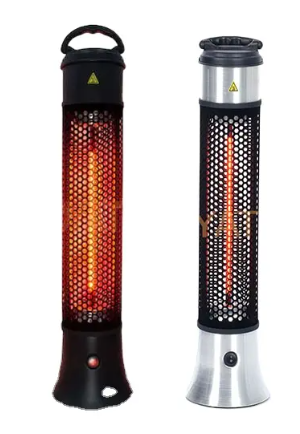
If you’re putting a 1500W infrared heater in a bathroom or a gazebo, you can’t just slap on a waterproof cover and call it a day. You’re dealing with a lot of power in places where steam and condensation are basically trying to eat your electrical connections. To actually keep things safe, you have to be obsessed with the barrier between the live current and the frame. Keeping the electricity where it belongs We use double-insulated housings and reinforced polymer brackets. Why? Because in a damp room, moisture likes to create “shortcuts” for electricity. We also use silicone-insulated wiring. Standard wires can crack after heating up and cooling down a few dozen times, but silicone holds up. It stops the electricity from “jumping” across a damp surface to the ground—which is exactly what you don’t want. Where things usually go wrong Almost every failure happens at the connection point. That’s why we seal the terminal blocks with high-temp epoxy or gaskets (look for IPX4 or better). It keeps the steam away from the copper. If you’re using an R7s or Sk15 socket, make sure it’s a tight fit. A loose connection leads to arcing, and in a humid room, that’s a fast track to a burnt-out socket. Safety and the “Heat Trade-off” A dedicated earth ground is a must. No shortcuts here. We also build in a leakage trip—basically a kill-switch that shuts everything down the second the insulation fails. Also, remember that 1500W is a heavy lift for your wiring. If your wire gauge is too thin, it’ll overheat, and that heat will chew through your insulation even faster. One last thing: those seals that keep the water out also trap the heat in. Give the reflector plenty of breathing room. If you cram the unit into a tight space, you might solve the electrical problem but end up melting the housing instead.