


Stop Guessing Why Your Glass is Warping
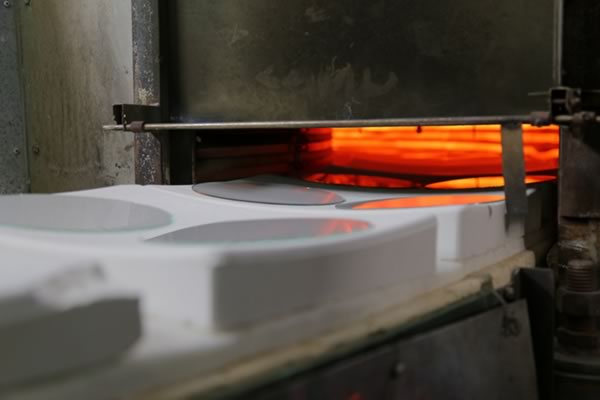
Ever wonder why your first batch of tempered glass looks perfect, but by the third run, everything is bowing or just snapping during cooling? It usually comes down to one thing: thermal gradients. Here’s the deal. If your heating lamps have even a tiny 5% difference in output across the tube, you’re creating internal stress patterns in the glass. You aren’t just heating it; you’re fighting it. We fix this by tightening the screws on the wattage and spectral output of our infrared emitters.
The problem with “standard” heat
Glass annealing is all about that soak temperature. But with standard IR lamps, you get these “hot spots” where the filament is a bit too dense. It sounds minor, but those spots cause localized expansion. It’s like trying to dry a shirt with a heat gun—some parts get scorched while others stay damp. We use high-consistency quartz tubes with filaments wound with actual precision. This keeps the heat flux linear. No spikes, no dips, just a steady stream of heat across the whole lamp. Think about the math for a second. If one lamp is pushing 110% power and the one right next to it is lagging at 90%, that glass sheet is never going to reach equilibrium. That’s why we obsess over tight wattage tolerances. It just makes sense.
Saving your hardware (and your sanity)
When your lamps are actually matched, your PID controllers can finally do what they were built to do. They don’t have to play “catch up” by cranking the rest of the bank to make up for one weak element. When you overcompensate like that, you start a nasty cycle. A few overworked lamps burn out, which shifts the load to the others, and suddenly your whole heater bank is failing in a chain reaction. It’s a headache nobody needs. One quick tip, though. You can’t just toss these into a messy fixture and expect miracles. **Check your reflectors.**If they’re dirty or crooked, they’re blocking the radiation. A high-precision lamp is basically a paperweight if a layer of grime is blocking 20% of the heat.
What this actually means for the shop floor
At the end of the day, this is about your scrap rate. It’s a great feeling to stop guessing why the afternoon shift is seeing more warps than the morning shift. You get a predictable thermal profile. Your QC process becomes a breeze because the glass comes out of the lehr with the same stress distribution every single time. Less waste, less stress, and a lot more predictability.