
Introduction
Let’s talk about thermocouples—but not the kind you grab off the shelf. These are built specifically for glass kilns, where we tune the sensor to match exactly how the glass additives absorb heat. We make these for serious setups—research labs and production furnaces—where temperature control has to dance with the chemistry of the melt. The whole point? Getting stable, repeatable readings, where the heat profile is driven by the glass itself, not just whatever the heater is doing.
The Reality Inside the Kiln
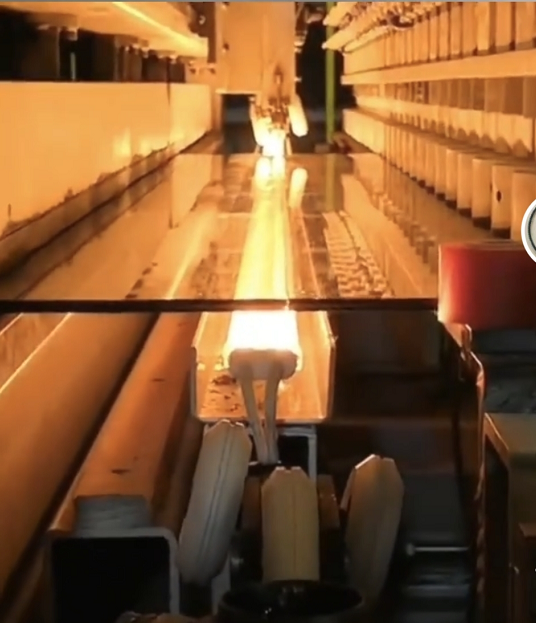
Inside a glass kiln, it’s brutal. The thermocouple sits right in the middle of wild temperature swings. So we build these probes to handle rapid cycling without falling apart at the junction. You get a clean, stable signal that translates straight to temperature—no guesswork. But the environment is rough: vapors, alkali splash, and radiant heat all day long. That’s why the whole assembly has to be rugged. For custom melts and research work, we match the sensor’s response and protection to the specific spectral needs of your batch. That way, you’re seeing the true melt temperature, not a reading blurred by interference from the additives.
What It’s Built From
We wrap the junction in high-purity quartz and refractory ceramics. Why? Because it needs to stand up to alkali and borate attack, day after day. The junction itself is welded—no cheap crimping—so it can take the shock of thermal pull cycles without breaking. Mounting is clean and solid, too. We give you compact, rigid fittings that hold everything in alignment so there’s no drift. The probe body is slim enough to fit tight ports, keeping the hot junction close to the glass without getting in the way of the flow. It’s a tough build. Repeated quenching and bake-outs? No problem.
Why It Matters for Your Work
When your glass additives absorb strongly at certain wavelengths, the temperature profile shifts. Your thermocouple has to report accurately through all of that. Our spectral approach cuts down on measurement drift caused by radiant bias. The result? Repeatable readings, batch after batch. That means fewer rejects, better viscosity control, and annealing that stays consistent. Now, there’s a trade-off. The tighter spectral tuning needs careful calibration and a controlled furnace atmosphere. You can still run without those, and the probe will function—but the data won’t be as precise.